BIO: Why art4change
Why I do artwork towards changing our profit based political & economic system
I immigrated with my family to Los Angeles, CA when I was 7 years old. I lived in the West Adams-Crenshaw district. A working class African American community with a vibrant Japanese American community in the “Westside” avenues. (not WLA). I picked up drawing from my dad. But I always wanted to become rich and famous by doing art and had no interest in social change at the time. I felt like me and my family had no respect because we were not affluent and FOBs. I got called “fresh off the boat” a lot. I felt disrespect from customers and bosses while helping my dad gardening or working at the laundromat with my mom. I kept thinking incorrectly, one of these days I’ll get revenge on the white people, I’ll get mine.
The 3 key things that happened to me that changed me over the years.
(1).The Watts Rebellion broke out in 1965. We lived inside the riot curfew zone. For about 2 weeks anyone caught outside after 8pm curfew would be stopped and shot if you ran away by members of the 40th Armored Division. All those going outside the zone to work that had trucks got searched. I saw many injustices by the police against young African Americans. I also saw my friends and neighbors lacked enough good paying jobs and had crowded housing and disrespect from the police that led youth to acts of rage and violence.
As a self-employed gardener my dad had no health insurance. When he needed emergency kidney surgery he couldn’t work and we got evicted from our house by Dial Finance (now Wells Fargo.).
They saved for years and bought a small place for $15,000 just a few years before. I felt pressure not to talk about it, because Japanese are supposed to be “successful”, even though the majority of us were not,
I later found out.
(2) I found out those waging the war in Vietnam and those profiting from barbiturate overdoses in my community are the same billionaires. Like Dow Chemical. They made napalm but also barbituates popular with teens.
In the summer of 1972, over 30 Asians mostly Japanese American teens died due to barbiturate overdoses. The pressure to conform, keep your head low and work hard to “represent” Japanese and “succeed”. Whatever that meant, conflicted with
the realities that we saw in the adult world. Favoritism, racism in jobs and housing no matter how much you sucked up to the system. We saw how the profit system was messing up our own families.
But we couldn’t pinpoint what nor articulate the sources. We knew the US government threw all JA’s into camps but most all of the Nisei’s refuse to talk about it to our generation.
At the same time, Asians who looked like me were getting bombed on TV every night in Vietnam, and they kept saying it was to stop the communists from taking over. I first I believed it, but later learned from my friends at GIDRA
that the war was for dominating strategic ports and shipping lanes, and for tungsten, oil and money. I learned that both republicans and democrats were imperialists and exploiters but democrats wanted to be less racist and homophobic
domestically and co-opt enough minorities to more effectively, instead of just brute force.
(3) Organizing at Resthaven Community Mental Health Center, the facility that served the most numbers of APIs in the nation, located in L.A. Chinatown. I saw a large number of former “war-brides” from
Japan, Korea and Vietnam as patients spanning 3 wars from 1941 to 1975. Often victims of abuse and cultural deprivation by American military husbands.. I saw old folks who were interned into US concentration camps during WW2 who
would rise up in the facility cafeteria and accuse the security guard of plotting against the camp inmates. I saw a pretty young Latina who always wore a big hat covering her face. A former drill operator who had her entire scalp ripped out in a horrific workplace accident.
Everywhere, there were workers and ordinary people getting crushed and mangled mentally and or economically by the profit system, including it’s wars of aggression and occupation.
Ever since that time, I knew that we would have to change the whole system to permanently “fix” it while still fighting for improvements within it.
I have been very fortunate and privileged to use my artwork for social change while serving my class and people and raising a family.
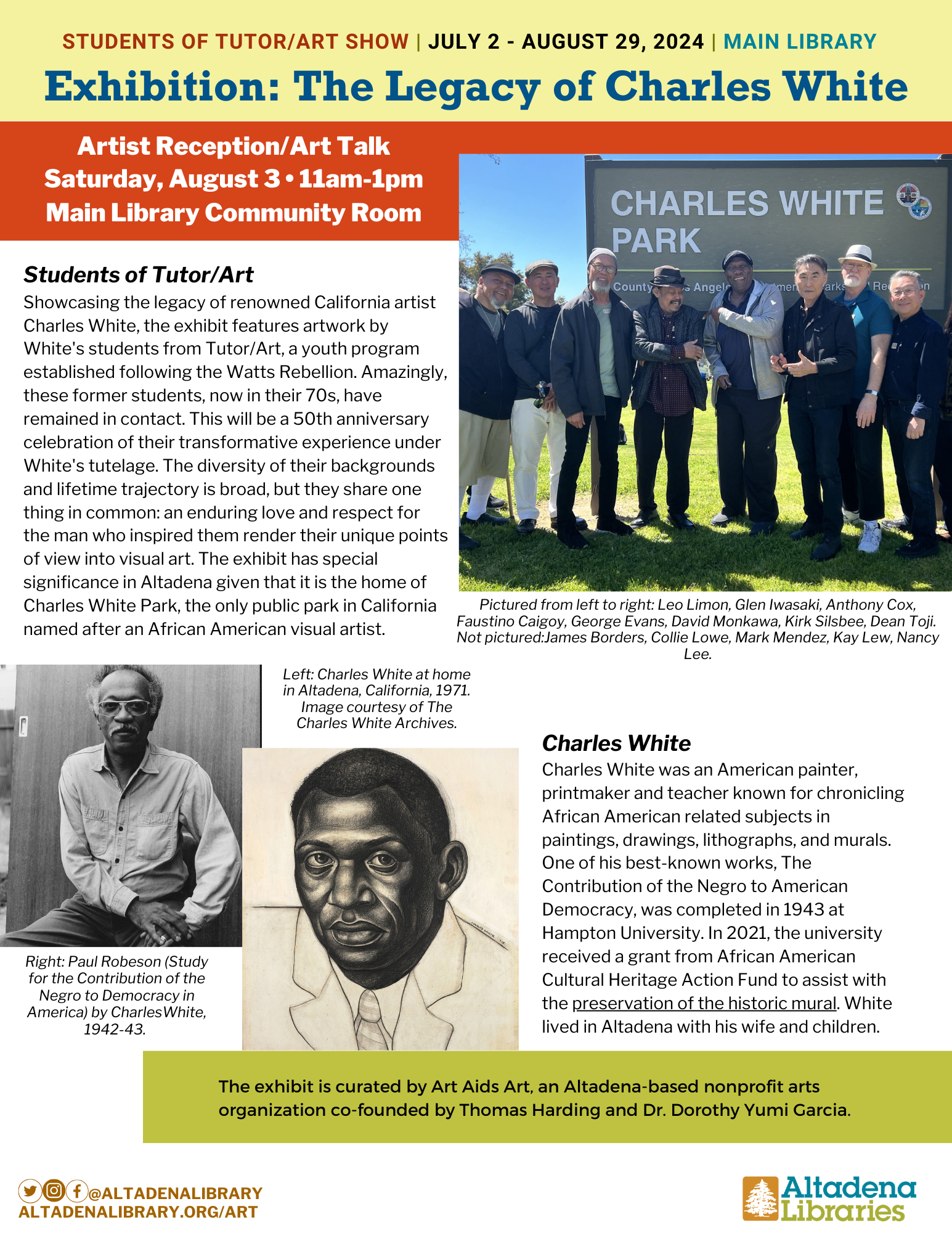
My appreciation to Mr. Charles White, big time artist, civil rights and revolutionary activist and all the artists and teachers who taught me how to draw, think and feel the right way.
Please donate to the victims of the Eaton Fire in Altadena where Mr. White resided. And to Mr. Bill Tara for creation of the Tutor Art Program, for young artists in inner city high
schools after the uprising of 1965. Only because of this experience and because of the support from my friends and family, that I’ve been able to do what I do.
The Tutor Arts Program, after the L.A. Uprising, steered me seriously towards art.
How to get good at drawing from Charles White.
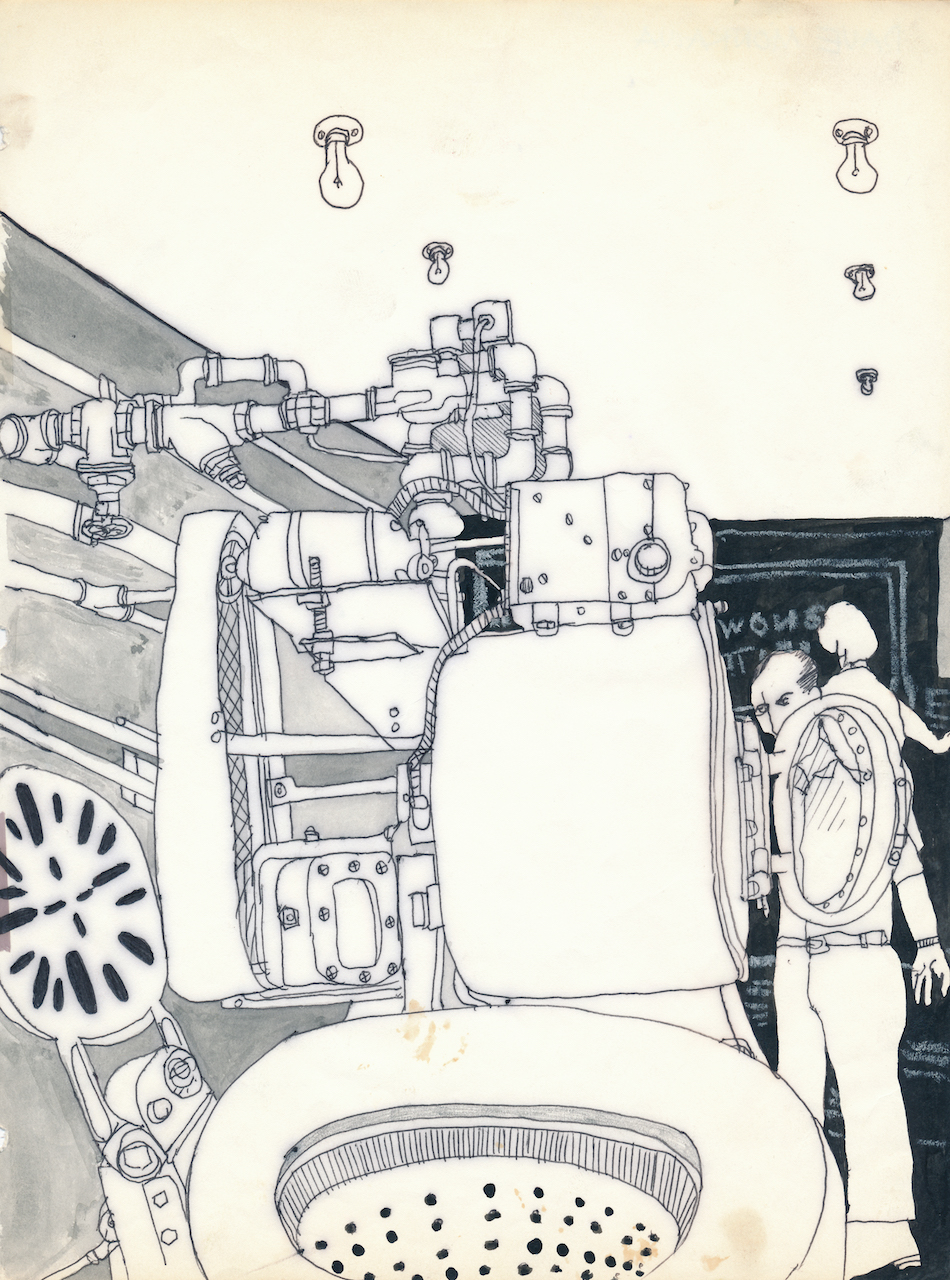
Mr. White required that we fill out at least one sketchbook each week. “Draw your folks, your neighborhood, your friends, what you do when hanging out.
Don’t draw out of your mind”, he said. “Practice drawing bones and muscles so you know what is happening below the skin. Not enough just to know the outside.”